

Graffiti Removal: Why Fast Response and Anti-Graffiti Coatings Matter
Graffiti is a clock, not a stain. The longer a tag stays up, the more it costs, and the cost is not just the removal. A wall that sits tagged for a week invites a second tag, signals that no one is watching, and starts pulling the whole property down with it. That is the broken-windows effect in plain terms: visible neglect breeds more neglect. For a property owner, HOA, or municipality, the winning strategy is the same one police and city crews already use. Remove it fast, then make the surface hard to tag again with a coating.
This guide covers why speed matters, the response windows HOAs and cities actually enforce, how removal changes by surface, and the difference between sacrificial and permanent anti-graffiti coatings. Done right, a recurring tag problem becomes a same-week non-event.
Key Takeaways
- The broken-windows effect is real: a tag left up invites more tagging and signals the property is unwatched. Speed is the deterrent.
- Many HOAs and municipalities enforce 24 to 72 hour removal rules, and the fine or notice lands on the property owner, not the tagger.
- Removal is surface-specific. Porous stucco, smooth glass, and painted metal each need a different method and chemistry.
- Sacrificial coatings wash off with the graffiti and get reapplied; permanent coatings let repeated tags wipe off the same barrier for years.
- A recurring response contract with one vendor turns a chronic tag problem into a fast, documented, same-week cleanup.
The broken-windows effect
The principle is simple and well documented: visible disorder invites more disorder. One untreated tag tells the next tagger the wall is fair game and tells tenants and customers that management is not paying attention. A single mark left up for a week often becomes three. A clean wall, restored quickly, sends the opposite signal: this property is watched and maintained, and tags do not survive here. Taggers chase visibility, and a surface that gets wiped within a day or two stops being worth the effort.
That is why response speed is the entire game. Removal is not just repair, it is deterrence. Every hour a tag stays up, it works against you. Every fast removal makes the next tag less likely.
The 24 to 72 hour rule
Speed is not only smart, it is often required. Across Coachella Valley cities and Inland Empire municipalities, graffiti-abatement ordinances commonly require property owners to remove visible graffiti within a set window, frequently 24 to 72 hours of notice. Many HOAs carry the same rule in their CC&Rs. Miss the window and the consequence lands on the owner: a notice, a fine, or in some jurisdictions the city removes it and bills you for the work, often at a higher rate than a private vendor would charge.
For an HOA board or a property manager, this turns fast response from a nice-to-have into a compliance obligation. The practical answer is a vendor on call who can be on site and have the wall clean inside the same window the ordinance demands. Folding graffiti response into a broader HOA pressure washing program keeps the community both clean and compliant without the board scrambling for a contractor every time a wall gets hit.
Surface-specific removal
There is no single way to remove graffiti, because the surface decides the method. Use the wrong approach and you trade a tag for permanent damage, a ghost shadow, or a stripped finish. The major cases:
- Porous masonry and stucco. Spray paint soaks into the pores, so surface scrubbing leaves a shadow. These need the right graffiti-removal chemistry to draw the paint back out, followed by a controlled rinse. On stucco that rinse is a soft wash, not a high-pressure blast that would chip the finish coat.
- Smooth and non-porous surfaces. Glass, glazed tile, and sealed metal release paint more readily. Glass tags often come off with a blade and solvent as part of window cleaning, restoring the pane without scratching it.
- Painted walls. Sometimes the cleanest fix is a color-matched repaint rather than chemical removal, especially where the existing paint would lift unevenly. The judgment call is matching the method to the substrate.
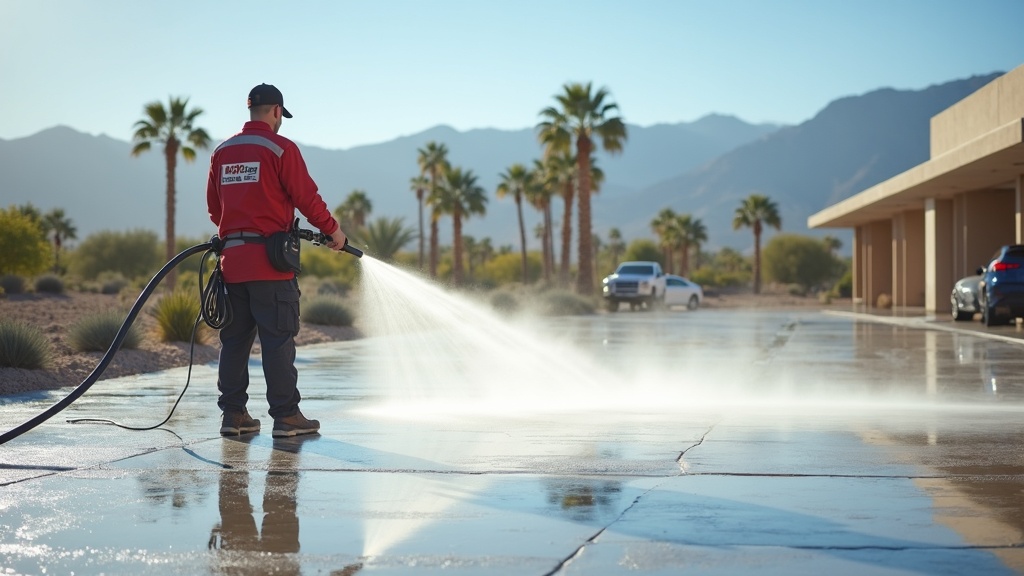
- Concrete and block. Hot water and the right remover lift most tags, and our pressure washing equipment handles the dense surfaces that can take the force.
The skill is reading the surface first. A crew that does this daily knows which chemistry and which pressure each material can take, so the tag comes off and the wall underneath survives. See the full graffiti removal service for how each surface is handled.
Sacrificial vs permanent coatings
Removing a tag is reactive. Coating the surface is how you get ahead of the next one. There are two families of anti-graffiti coating, and the right choice depends on how often a wall gets hit and what it is made of.
Sacrificial coatings form a clear, wax-like barrier over the surface. When the wall is tagged, the coating washes off together with the paint under hot water, taking the graffiti with it and leaving the surface clean. Then a fresh layer of coating goes back on. They are lower cost up front and work well on porous masonry, with the trade-off that the barrier is consumed at each removal and must be reapplied.
Permanent coatings are a durable, often urethane-based clear sealer that bonds to the surface and stays put. Graffiti sprayed over a permanent coating sits on top of the barrier and wipes off with solvent without removing the coating itself, so the same protective layer survives many tags over a span of years. Higher up-front cost, far lower cost per incident on a wall that gets hit repeatedly. For a recurring hot spot, the permanent coating usually pays for itself fast.
The decision is economic. An occasional tag favors sacrificial; a wall that gets hit again and again favors permanent. A vendor who removes graffiti regularly can tell you which surfaces on your property are worth coating and which kind to use.
Recurring response contracts
The strongest position for a property with a tag problem is not removing graffiti one emergency at a time. It is a recurring response contract with a single vendor who monitors or responds on call, removes within the ordinance window, documents every incident with before-and-after photos, and applies coatings to the repeat-target surfaces. That arrangement converts a chronic, stressful problem into a routine, same-week process.
The documentation matters as much as the removal. A dated photo log proves compliance with the 24-to-72-hour rule, supports any insurance or police report, and gives an HOA board a clean record to show owners. One vendor handling the whole cycle, response, removal, coating, and records, across the Coachella Valley and Inland Empire, is what keeps a property ahead of the taggers instead of chasing them. When that vendor also handles the commercial pressure washing and windows, the entire exterior stays clean under one contract.
The takeaway
Graffiti rewards neglect and punishes delay. Remove it fast to kill the broken-windows cycle and stay inside the ordinance window, match the removal method to the surface so you do not trade a tag for damage, and coat the repeat targets so the next tag wipes off instead of soaking in. Put it all on a recurring contract with one vendor, and a wall that used to be a monthly headache becomes a same-week non-issue.
Graffiti Removal FAQs
How fast does graffiti need to be removed?+
Can all graffiti be removed without damaging the wall?+
What is the difference between sacrificial and permanent anti-graffiti coatings?+
Should an HOA put graffiti removal on a contract?+
Tagged Today, Clean This Week
Fast response inside the ordinance window, surface-specific removal, and anti-graffiti coatings across the Coachella Valley and Inland Empire. Send your address and we respond within 24 hours with a flat-rate quote.