How to Clean Solar Panels in the Desert (and Why It Matters)
In the Coachella Valley, a dirty solar array is not a cosmetic problem. It is a production problem. Desert dust, blowing sand, and pollen build a film across the glass that blocks light before it ever reaches the cells. Independent field studies in arid climates put the loss at roughly 15 to 25 percent of output when panels go uncleaned through a dusty season. On a commercial array that figure is real money walking out the door every billing cycle. The fix is simple, but the method matters: solar glass gets cleaned with pure water and zero high pressure, or it does not get cleaned at all.
This is one of the few cleaning jobs where doing it wrong costs more than skipping it. A cracked panel or a voided warranty erases years of savings. Below is how production drops, why the desert is the worst case, and the exact method a professional uses to clean an array without touching the manufacturer warranty.
Key Takeaways
- Desert dust and soiling cut solar output by roughly 15 to 25 percent between cleanings, and more after a windstorm or pollen surge.
- Panels are cleaned with deionized or purified water and no soap, so nothing is left behind to streak, smear, or hold grit.
- High pressure is dangerous on solar glass: it cracks cells, drives water past the seals, and voids most manufacturer warranties.
- In the Coachella Valley, two to four cleanings a year keeps an array near peak. Commercial solar fields often need a set quarterly schedule.
- Cleaning is measured against the panel datasheet and warranty, not against how a window gets washed.
Why desert dust costs you so much output
A solar panel makes power by letting light hit the cell. Anything sitting on the glass is a filter. In a wet, temperate climate the rain rinses most of that film away on its own, so soiling losses stay in the low single digits. The desert is the opposite environment. Months pass with no rain to self-clean the glass, and in that gap the array collects fine wind-blown dust, sand, pollen, bird droppings, and a baked-on mineral haze from the little dew that does form. That layer does not wash off in the next breeze. It compounds.
The result is a soiling loss that climbs steadily until someone cleans the panels. Across arid regions the documented range lands around 15 to 25 percent of potential output during a heavy dust stretch, and isolated panels fouled by droppings can drop far more because a single shaded cell drags the whole string down. For a homeowner that is a higher power bill. For a commercial operator running a roof array or a ground-mount field, it is a measurable hit to the return on a six-figure installation.
The right method: pure water, no soap
Professional solar cleaning uses deionized or purified water and a soft brush or pure-water-fed pole, and that is deliberate. Deionized water has had its minerals stripped out, so it lifts dust and dries without leaving the spotting and film that tap water leaves behind. Because the water itself does the rinsing, there is no detergent in the process. Soap is a problem on solar glass for two reasons: any residue left behind becomes a sticky film that grabs the next round of dust faster than bare glass, and many panel manufacturers specifically prohibit cleaning agents in their care guidelines. Pure water sidesteps both issues. It cleans the glass and leaves nothing behind.
The tooling is gentle by design. A water-fed pole with a soft bristle head reaches a roof array from the ground or a stable platform, agitates the soiling loose, and flushes it off with purified water. No ladders leaned against panels, no walking the array, no harsh chemistry. The same purified-water approach is what makes streak-free glass possible on storefronts, which is why a crew that handles window cleaning is already equipped to clean solar correctly.
Why high pressure is dangerous on panels
It is tempting to point a pressure washer at a dusty array and call it fast. It is also one of the most expensive mistakes you can make on a roof. Solar panels are precision glass laminated over silicon cells and sealed at the edges. High pressure attacks every weak point:
- It cracks cells. A high-PSI stream can micro-fracture the cells under the glass. The damage is often invisible from the surface but shows up as dead spots and lost output that never comes back.
- It breaches the seals. Panels are sealed against moisture at the frame. Force drives water past those seals into the laminate, where it corrodes connections and clouds the panel from the inside.
- It voids the warranty. Nearly every manufacturer warranty excludes damage from improper cleaning, and pressure washing is the textbook example. One pass can turn a 25-year warranty into a worthless piece of paper.
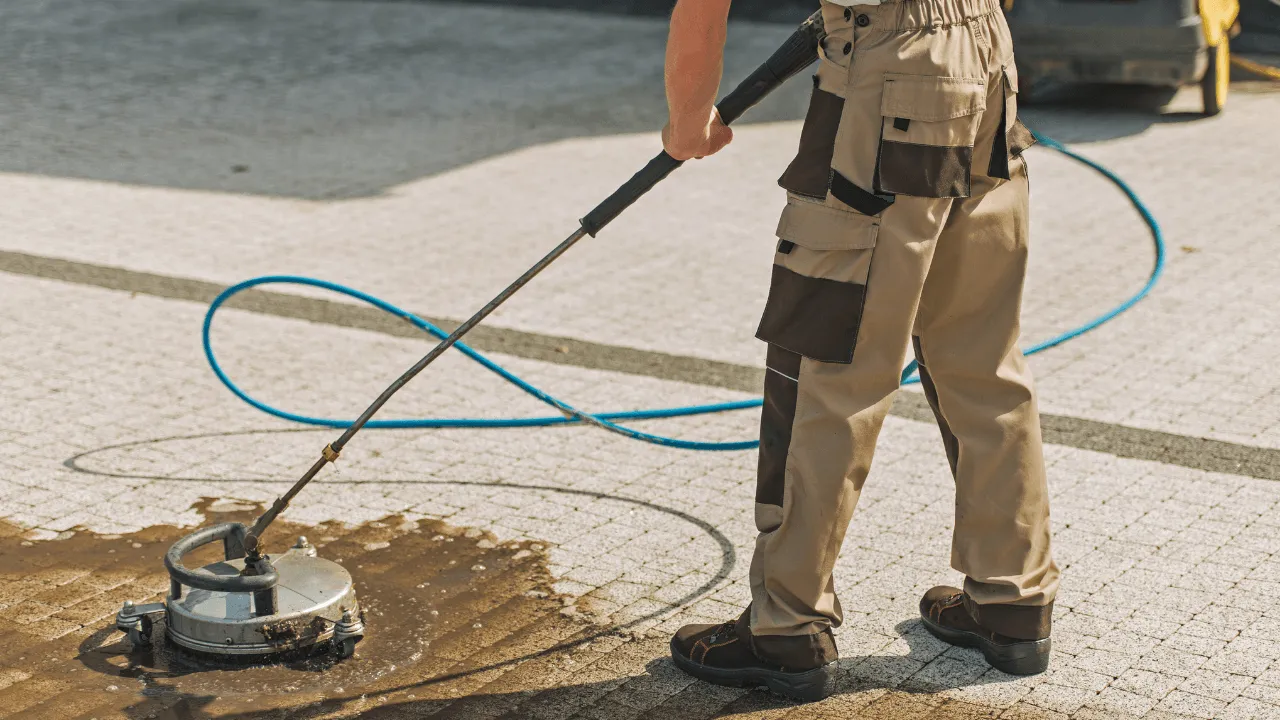
The same force is genuinely useful one level down, on the concrete pad or roof deck around the array, which is exactly where our pressure washing equipment belongs. On the glass itself, force is the enemy. The surface decides the method.
How often to clean in the Coachella Valley
Cadence depends on the site, but the desert pushes the schedule tighter than most regions. For a typical Coachella Valley home or small commercial roof, two to four cleanings a year keeps the array near its rated output, with the heaviest need running through the dry, dusty stretch from late spring into fall. After a major windstorm or a haboob that coats everything in fine grit, an off-cycle cleaning often pays for itself in recovered production within weeks.
The economics are straightforward. Compare the cost of a cleaning against the value of the 15 to 25 percent of output you are losing while the glass stays fouled. On most arrays the cleaning is cheap by comparison, and the bigger the system, the more obvious the math becomes.
Commercial solar fields and large arrays
For commercial solar, cleaning stops being a one-off and becomes a maintenance line item. Carport canopies, warehouse roof arrays, and ground-mount fields across the Coachella Valley and Inland Empire all soil on the same desert schedule, and the lost-production cost scales directly with system size. A 5 percent recovery on a small home array is a few dollars. The same percentage on a commercial field is a meaningful number every quarter.
That is why portfolio operators put solar cleaning on a set quarterly cadence handled by one vendor with the right pure-water equipment and the insurance to be on a commercial roof. Folding it into a broader site-maintenance contract keeps the array producing without anyone having to track it panel by panel. Our commercial pressure washing crews already mobilize to these sites for hardscape and building exteriors, so adding the array to the same visit is efficient: the panels get a pure-water clean while the pads, walkways, and structures around them get pressure cleaned in one trip. See the full solar panel cleaning service for how that schedule is built.
The bottom line
Solar is an investment that quietly underperforms when the glass is dirty, and in the desert the glass is dirty most of the year. Clean it with pure water and no pressure, on a cadence that fits the dust, and the array earns what it was sized to earn. Clean it wrong with a pressure washer and you trade a small recurring cost for a cracked panel and a dead warranty. For any roof array, carport, or solar field in the Coachella Valley, the safe and productive choice is a professional pure-water clean on schedule.
Desert Solar Panel Cleaning FAQs
How much output do dirty solar panels lose in the desert?+
Can you pressure wash solar panels?+
Why no soap on solar panels?+
How often should solar panels be cleaned in the Coachella Valley?+
Get Your Array Producing Again
Pure-water cleaning, no pressure on the glass, on a cadence built for the desert. Send your address and we respond within 24 hours with a flat-rate quote.